Runway calculator: how many months of cash does your startup have?
How to calculate startup runway: the formula, gross vs net burn, what to count, a month-by-month runway calculator in a spreadsheet, scenario testing, how much runway you need and how to extend it.

Runway is the number of months your startup can keep operating before the bank account hits zero. It is the most important number for an early-stage founder, because it decides when you need to raise, cut costs or reach profitability. This guide explains the runway formula, how to build a runway calculator in a spreadsheet, how to stress-test it and what to do when the number is too short.
In this article11
The runway formula
The basic formula is simple:
Runway (months) = cash in the bank ÷ monthly net burn
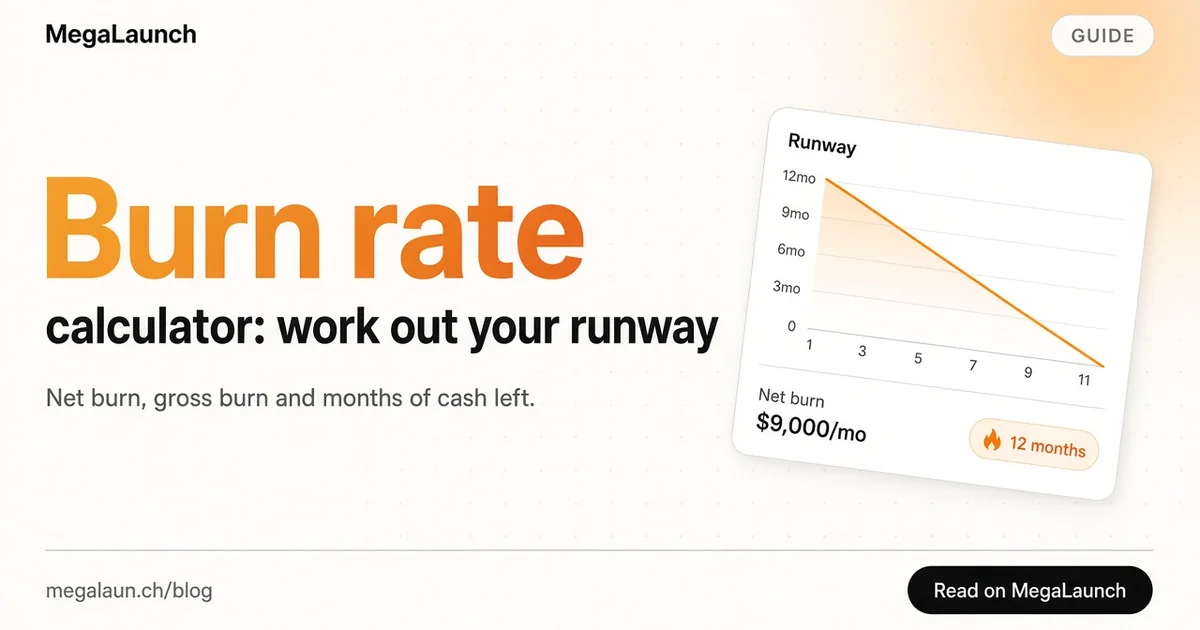
Net burn is the cash you lose each month: money going out minus money coming in. If you are not familiar with the difference between gross and net burn, read the burn rate guide first. Burn rate is the speed at which a company spends its cash, and runway is how long that cash lasts at this speed.
Example
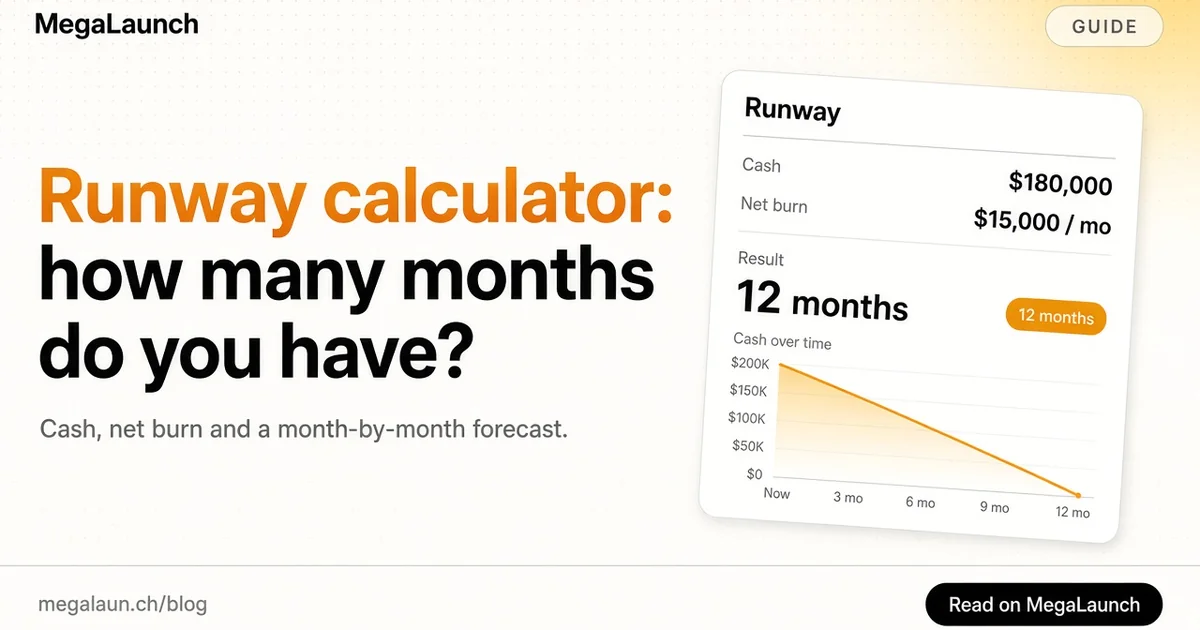
- Cash in the bank: $180,000
- Monthly expenses: $22,000
- Monthly revenue collected: $7,000
- Net burn: $22,000 − $7,000 = $15,000
- Runway: $180,000 ÷ $15,000 = 12 months
Gross burn vs. net burn
- Gross burn is total monthly spending: salaries, tools, hosting, rent, marketing.
- Net burn is gross burn minus the cash that comes in from customers.
Use net burn for runway, because revenue extends the time you have. But also look at gross burn: if revenue drops suddenly, gross burn is the speed you would lose money at.
What to count
Runway is about cash flow, not accounting profit. Count money when it actually moves.
Include in expenses:
- Salaries, contractor fees and payroll taxes.
- Recurring operating expenses: software, hosting, office, insurance.
- Payment processing fees and other costs that grow with revenue.
- Planned one-off costs in the month they will be paid, such as a laptop or a legal bill.
- Loan repayments.
Include in income:
- Customer payments when collected, not when invoiced.
- Annual plans in the month the cash arrives. This matters: an annual prepayment raises cash today but does not repeat next month.
- Grants or tax credits only once they are confirmed.
Do not count money from a round that has not closed. A term sheet is not cash.
Build a runway calculator in a spreadsheet
A simple runway calculator needs one tab with one row per month.
| Column | Content |
|---|---|
| A | Month |
| B | Opening cash (= previous month's closing cash) |
| C | Cash in (revenue collected + other income) |
| D | Cash out (all expenses paid) |
| E | Net burn (= D − C) |
| F | Closing cash (= B − E) |
Fill the first opening cash with today's bank balance. Project 18 to 24 months. The month where closing cash goes below zero is your real runway, and it is more accurate than the one-line formula because it includes growth and planned changes.
Then add a few inputs at the top of the sheet:
- Monthly revenue growth rate.
- New hires and their start month.
- Price changes or planned marketing spend.
Every month, replace the projection with the actual numbers. The gap between forecast and actual teaches you more than the forecast itself.
Include growth in the forecast
If revenue grows, net burn falls and runway gets longer. Two numbers help:
- Gross margin: for each new dollar of revenue, how much is left after direct costs like hosting and payment fees. Use it, not 100%, when you model new revenue.
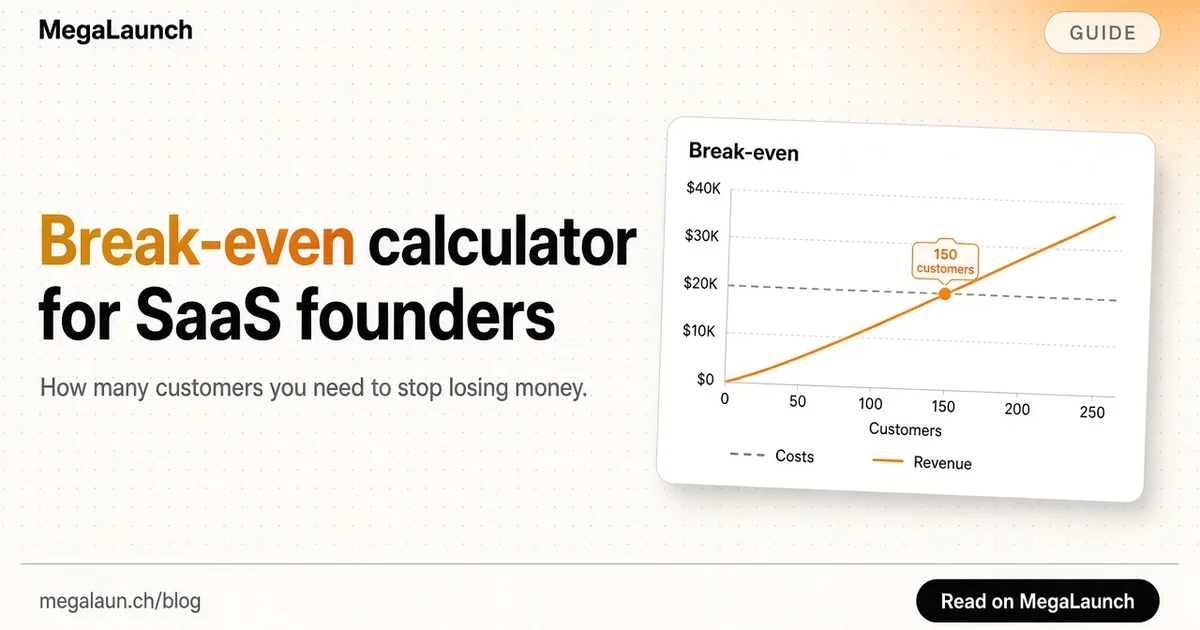
- Break-even month: the month where cash in equals cash out. If it comes before your cash runs out, you are "default alive". The break-even calculator shows how to find it.
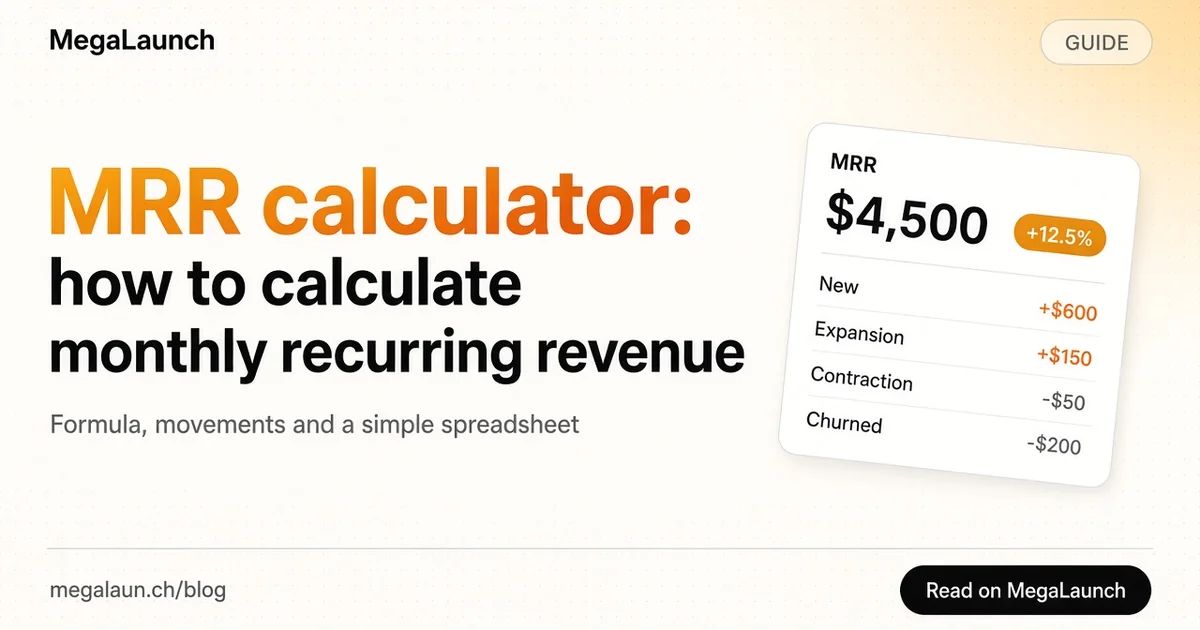
Be honest with growth assumptions. Use your actual growth over the last three to six months, not the growth you hope for. Track recurring revenue with an MRR calculator so the input is real.
Stress-test your runway
A runway number based on one forecast is fragile. Run a simple sensitivity analysis with three versions:
| Scenario | Revenue growth | Expenses | Runway |
|---|---|---|---|
| Base | Your recent average | As planned | e.g. 14 months |
| Bad | Zero growth | As planned | e.g. 11 months |
| Worse | Revenue −20% | +10% | e.g. 9 months |
The numbers in the last column are only an illustration; compute your own. Plan decisions on the bad case, not the base case. This is standard financial modeling practice, and a small spreadsheet is enough at the early stage.
How much runway do you need?
There is no universal answer, but some rules of thumb are common among founders and investors:
- Start fundraising with at least 6 months of runway left. Raising usually takes longer than planned.
- Aim for 18 to 24 months after a round, so you have time to hit the next milestone and raise again.
- Below 6 months without a clear path, treat it as urgent: cut costs or change the plan now.
For bootstrapped founders the goal is different: reach break-even before the runway ends, then grow from revenue.
How to extend your runway
If the number is too short, you have two levers: spend less or collect more.
Spend less:
- Cancel unused tools and downgrade plans you do not need.
- Delay hires that are not tied to revenue.
- Renegotiate hosting or annual contracts.
Collect more:
- Offer annual plans with a discount to bring cash forward.
- Raise prices for new customers, or remove an underpriced plan.
- Focus marketing on channels that already convert.
- Launch to reach new users quickly. A launch on a platform like MegaLaunch costs little and can bring the first paying customers.
Common runway mistakes
- Using last month's burn only. One unusual month distorts the result. Use an average or the forward forecast.
- Forgetting annual costs such as insurance, domain renewals or yearly software plans.
- Counting annual prepayments as monthly revenue. It makes runway look longer than it is.
- Counting money that is not in the bank. Signed but unpaid invoices and unclosed rounds are not cash.
- Updating the sheet once a quarter. Update it every month, after you close your books.
Summary
Runway is cash divided by net burn, but the useful version is a month-by-month spreadsheet that includes growth, planned costs and a bad-case scenario. Look at it every month, start raising or cutting early, and use the time you have to reach the next milestone. Pair it with customer acquisition cost to know whether growth is helping or hurting your runway.
Frequently asked questions
How do you calculate startup runway?
Divide the cash in the bank by your monthly net burn, which is cash out minus cash in. A month-by-month spreadsheet forecast gives a more accurate result.
Should I use gross burn or net burn for runway?
Use net burn, because revenue extends your runway. Keep an eye on gross burn too, since it shows how fast you would lose cash if revenue dropped.
How much runway should a startup have?
A common rule of thumb is 18 to 24 months after a round, and to start fundraising with at least 6 months left.
How can I extend my runway?
Cut unused tools and non-essential hires, renegotiate contracts, and bring cash forward with annual plans, price increases or channels that already convert.
Sources
 @matthias_mrc
Put it into practice. Launch your product.
A permanent page, a followed link to your site, and makers who vote for what they like.
- Free with a link back to MegaLaunch
- Premium: $14.99 one-time, no backlink needed
Done for you
We submit your product to 100+ dofollow directories.
From one brief, with a report for every directory. No badge needed on your site.


From$99one-time
See the plans