Micro SaaS ideas: 15 to build alone in 2026
Where good micro SaaS ideas come from, 15 ideas to adapt by audience, a quick way to score an idea, and how to price and find your first paying customers.

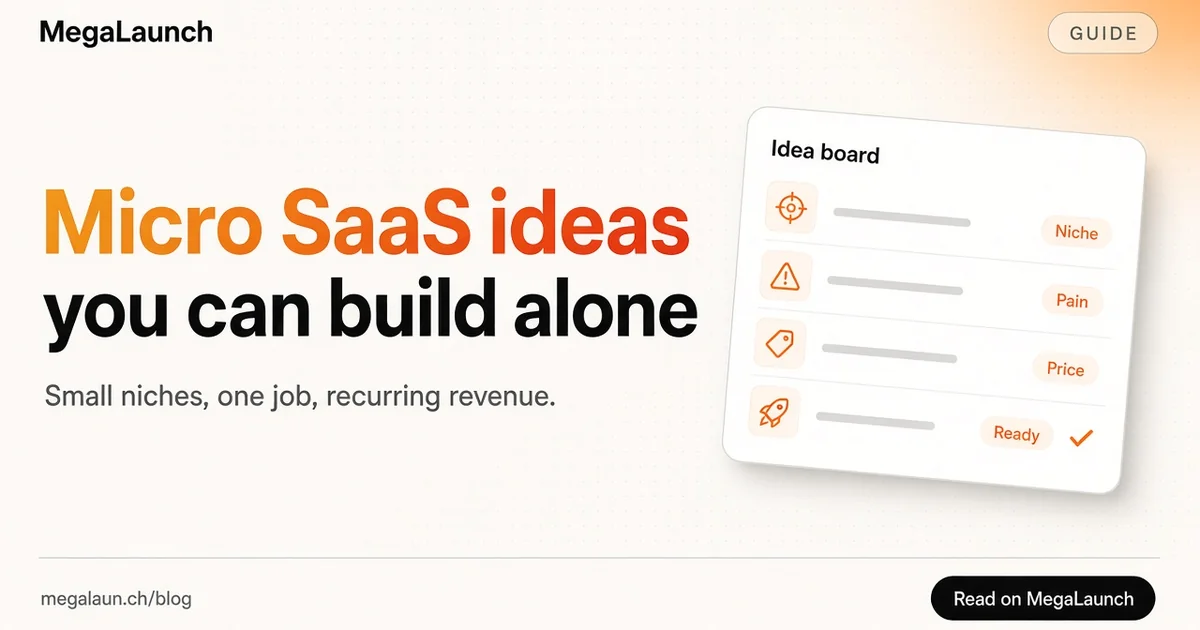
A micro SaaS is a small software business, usually run by one or two people, that solves one specific problem for a narrow group of customers and charges a subscription. It will not become the next unicorn, and that is the point: low costs, no investors, and a product you can build, sell and support alone. This guide lists micro SaaS ideas grouped by where they come from, shows how to judge an idea in an afternoon, and explains how to get your first paying users.
In this article9
What counts as a micro SaaS
Software as a service means the software runs on your servers and customers pay a recurring fee to use it. A micro SaaS adds three constraints:
- A narrow audience. "Dentists in Germany who use a specific booking system" rather than "small businesses".
- One job done well. The product does one thing that customers would otherwise do by hand.
- A tiny team. Usually a solo founder, so support, marketing and code all fit in one person's week.
Good micro SaaS products often sit on top of a bigger platform: a plugin, an integration, a reporting add-on. The platform brings the customers; you fill a gap it ignores.
Where good micro SaaS ideas come from
Paul Graham's essay How to Get Startup Ideas argues that the best ideas are noticed rather than invented: they come from problems you or people near you already have. For a micro SaaS, that usually means one of five sources.
1. Your own job
Look at the spreadsheets, copy-paste routines and weekly reports in your current or last job. Any task you repeat every week that a script could do is a candidate. You already speak the customer's language and know where to find them.
2. Gaps in popular platforms
Read the feature request boards, reviews and community forums of tools such as Shopify, Notion, Webflow, Stripe or GitHub. Requests that have sat unanswered for years are a signal the platform will not build them. An integration or add-on that fills the gap can find customers on the platform's own marketplace.
3. Boring industries
Accountants, property managers, clinics, schools, trades and local agencies run on email, paper and spreadsheets. They care less about design than about saving an hour a day, and they are used to paying for software.
4. Unbundling a big tool
Large products do fifty things. Many users need one of them, done better or cheaper. A focused version of one feature, for one audience, can win on simplicity.
5. Requests for startups
Investors publish lists of problems they want solved, such as Y Combinator's Requests for Startups. They are aimed at bigger companies, but reading them shows which shifts are creating new problems that a small tool can attack from the edge.
15 micro SaaS ideas to adapt
These are starting points, not validated businesses. Each one needs a specific audience before it becomes an idea worth building.
For e-commerce and creators
- Abandoned-cart reminders by SMS for one store platform.
- A tool that turns product reviews into social media images.
- Inventory alerts that post to Slack or Discord when stock runs low.
- A link-in-bio page with sales analytics for digital product sellers.
For developers and SaaS teams
- Uptime and SSL certificate monitoring with plain-language alerts.
- A changelog widget that shows new features inside an app.
- Status page generator for small teams.
- Automatic screenshots of an app's key pages after each deploy.
For marketers and founders
- A meta tag and Open Graph preview checker for every page of a site.
- A testimonial collector that asks happy customers at the right moment.
- Waitlist and referral pages for products before launch (see our coming soon page guide).
- Social proof widgets that show recent signups.
For local and service businesses
- Appointment reminders for a single profession, such as dog groomers.
- Simple client portals for freelance bookkeepers.
- Review request emails after each job for trades and home services.
How to judge a micro SaaS idea in one afternoon
Score each idea from 1 to 5 on these questions, and only move forward with ideas that score high on the first three.
- Is the pain frequent? Weekly beats yearly. Frequent problems create habits and low churn.
- Do people already pay to solve it? Existing tools, freelancers or paid templates are good news: there is a market.
- Can you reach the buyers? Name the forum, newsletter, marketplace or community where 1,000 of them gather. If you cannot, the idea is hard to sell alone.
- Can you build a first version in four to six weeks?
- Will it still matter in three years? Check the trend for the main search term on Google Trends.
Then do the step most people skip: talk to ten potential customers before writing code. Ask how they handle the problem today and what it costs them, following the method in The Mom Test. Our idea validation guide and value proposition canvas walk through this.
Pricing a micro SaaS
Charge from day one. A free product teaches you little about whether people value it. Common starting points for small B2B tools are a single monthly plan, or two or three tiers based on usage. Price on the value of the time saved, not on your costs. Our guide to SaaS pricing models compares the options, and you can browse real small products and their prices in the Indie Hackers products directory.
Getting your first 10 customers
- Go where the audience already is. The platform marketplace, a niche subreddit, a Slack community, an industry newsletter.
- Write to people one by one. A short, personal cold email to someone who described the problem publicly works better than any ad at this stage.
- Build in public. Sharing progress, numbers and lessons on X or LinkedIn brings early followers who become first users; see build in public.
- Launch on directories and launch platforms. They give you a first public page, backlinks and early feedback. You can submit your product to MegaLaunch for free.
Mistakes that kill micro SaaS projects
- Building for "everyone". A tool for "teams" competes with giants. A tool for "Shopify stores selling coffee subscriptions" competes with almost nobody.
- Picking an audience that does not pay. Students and hobbyists love free tools; businesses pay for time saved.
- Polishing before selling. Ship the smallest version that does the job, then improve it with paying users.
- Depending on one platform without a plan B. If your whole product lives inside another company's API, read its terms and keep a direct relationship with your customers by email.
Pick one and start this week
Choose the idea where you understand the customer best, write down who they are and where they gather, and talk to five of them before Friday. A micro SaaS rarely fails because the idea was too small. It fails because nobody told the right people it existed. When it is ready, plan the public day with our product launch strategy.
Frequently asked questions
What is a micro SaaS?
A micro SaaS is a small software-as-a-service business, often run by one or two people, that serves a narrow audience with one focused product and a recurring subscription.
How do I find a micro SaaS idea?
Look at repetitive tasks in your own job, unanswered feature requests on popular platforms such as Shopify or Notion, and industries that still run on spreadsheets. Then confirm the pain by talking to potential customers.
How much should a micro SaaS charge?
Price on the value of the time or money you save the customer, not on your costs. Many small B2B tools start with one monthly plan or two to three tiers and adjust after the first paying users.
Can one person build a micro SaaS?
Yes. That is the usual setup. Keeping the audience narrow and the product focused on one job is what makes code, support and marketing manageable for a solo founder.
Sources
 @matthias_mrc
Put it into practice. Launch your product.
A permanent page, a followed link to your site, and makers who vote for what they like.
- Free with a link back to MegaLaunch
- Premium: $14.99 one-time, no backlink needed
Done for you
We submit your product to 100+ dofollow directories.
From one brief, with a report for every directory. No badge needed on your site.


From$99one-time
See the plans