Lifetime deal: should your SaaS offer one?
How SaaS lifetime deals work, their real costs, when they make sense, how to price one with plan limits, and alternatives such as founding member pricing.

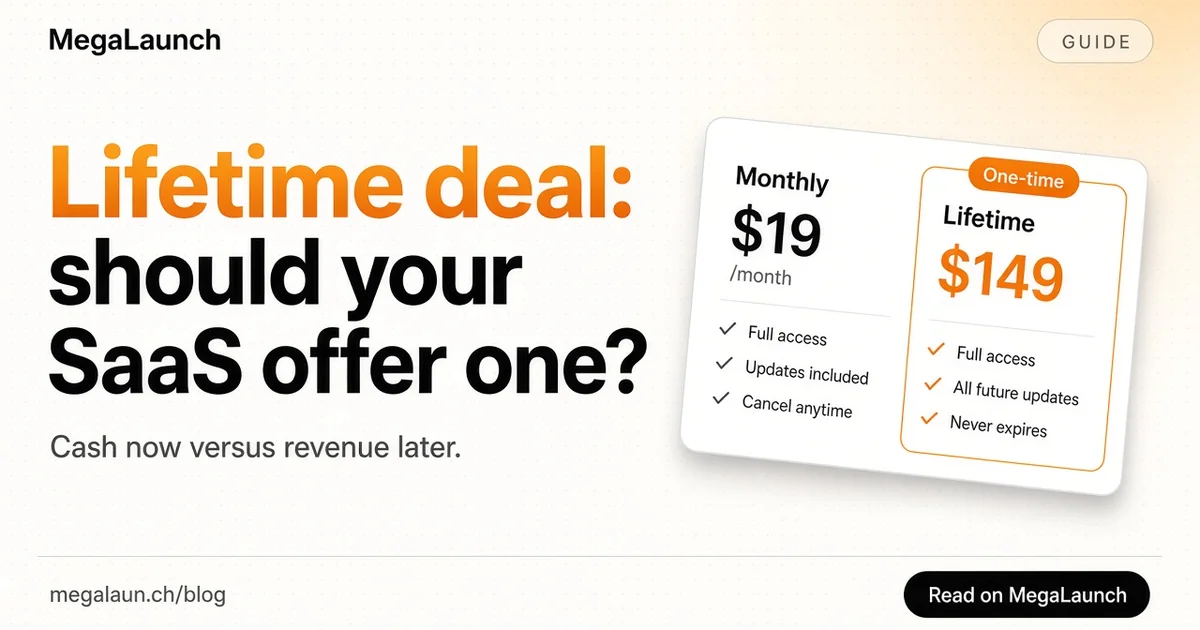
A lifetime deal (LTD) is a one-time payment that gives a customer access to a software product for as long as it exists, instead of paying every month. For buyers it is a bargain. For a young SaaS it can be a quick source of cash and early users, or a long-term cost that quietly eats your margins. This guide explains how lifetime deals work, when they make sense, how to price one, and how to run one without hurting the business.
In this article10
What a lifetime deal is
Most SaaS products use a subscription business model: customers pay monthly or yearly, and the company earns recurring revenue as long as they stay. A lifetime deal replaces that stream with a single upfront payment. The customer keeps access to an agreed plan, usually including future updates to that plan, without paying again.
Lifetime deals are often sold through deal marketplaces such as AppSumo and Dealmirror, which bring a large audience of deal hunters and take a share of each sale. Founders also sell them directly on their own site, for example to a waitlist before launch. If you are comparing marketplaces, our list of AppSumo alternatives covers the main options.
Why founders offer lifetime deals
- Cash without investors. A successful campaign can fund months of development.
- Early users and feedback. LTD buyers tend to test products hard and report bugs quickly.
- Reviews and social proof. Marketplace reviews and testimonials help later launches.
- Validation. People paying upfront for an early product is a stronger signal than signups to a free plan.
The hidden costs
The problem is that every lifetime customer keeps costing you money and time while paying nothing more.
- Ongoing costs. Servers, email, storage, AI tokens and third-party APIs scale with usage, not with revenue. A heavy user on a lifetime plan can become unprofitable.
- Support load. Deal buyers often arrive in large numbers in a short window and expect fast answers.
- Feature pressure. Lifetime users may push for features that do not fit your best monthly customers.
- Lower future revenue. Some of your best-fit customers would have paid a subscription for years. In customer lifetime value terms, you are trading many future payments for one today.
- Pricing anchor. If your product is known as a cheap lifetime deal, raising prices later is harder.
When a lifetime deal makes sense
A lifetime deal is usually a better fit when:
- your costs per user are low and predictable, such as a desktop app, a template tool or a utility with no heavy API usage
- you need early cash and users more than you need recurring revenue right now
- you can limit the deal in number, time or features
- the product is stable enough to support hundreds of new users at once
It is usually a worse fit when your product depends on expensive per-use services, when your target customers are larger businesses that happily pay monthly, or when you are already growing on subscriptions.
How to price a lifetime deal
There is no standard formula, but a simple way to reason about it:
- Start from your monthly price. Say your plan is $19 a month.
- Estimate how long a typical subscriber stays. If your monthly churn rate is 5 percent, an average customer stays about 20 months, worth around $380.
- Estimate the cost of serving one user for several years. Hosting, support time and paid APIs.
- Set the lifetime price so that it covers several years of costs with margin, and treat any gap to the subscriber value as the price of early cash and users.
These numbers are examples only; plug in your own. If the lifetime price does not cover your real costs for at least a few years, change the plan limits rather than lowering the price.
Protect yourself with plan limits
The safest lifetime deals are clear about what "lifetime" includes:
- Usage caps: a fixed number of projects, seats, credits or monthly actions.
- Tier stacking: buyers can purchase extra codes to unlock higher limits, which raises revenue per buyer.
- Scope of updates: say whether future features in the same plan are included, and that new products or add-ons are not.
- "Lifetime of the product": state that access lasts as long as the product is offered, and say what happens if it shuts down.
- A fixed number of deals or a closing date. Scarcity is honest when it protects your costs.
Write these rules on the deal page and in your terms, before the first sale.
How to run a lifetime deal campaign
- Fix onboarding first. Hundreds of new users in a week will find every confusing screen. A short welcome email and a help center save hours.
- Prepare support. Write answers to the 20 most likely questions. Set expectations on response times.
- Choose the channel. A marketplace brings volume; selling directly to your own list keeps the full price and the relationship.
- Announce it to your audience. Email your waitlist, post where you build in public, and add the offer to your coming soon page if you are not launched yet.
- Track cost per user from day one. Watch which features drive server and API costs, and adjust caps for future buyers.
- Plan the exit. Decide in advance when the deal closes and how you move new customers to subscriptions.
Alternatives to a lifetime deal
If the risks feel too high, you can get many of the same benefits another way:
- Founding member pricing: a discounted subscription locked in for early users.
- Annual plans with a discount: cash upfront, but customers still renew.
- Pre-sales or paid beta: a one-off payment for the first year while the product is built.
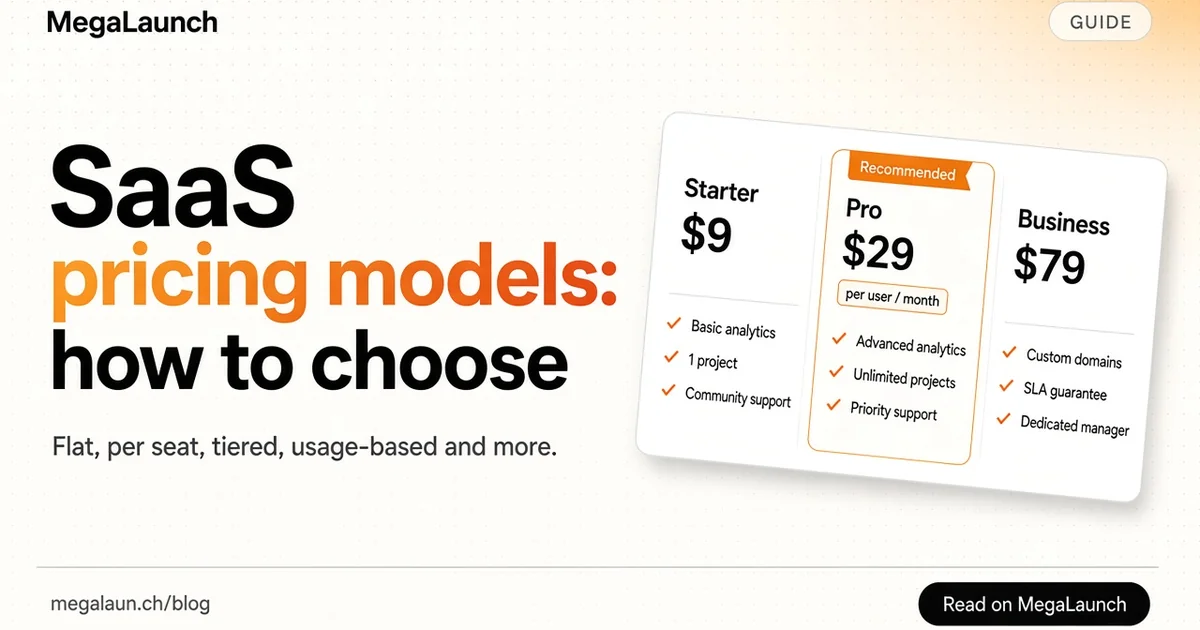
- A free launch. A public launch on directories and launch platforms brings early users and feedback at no cost. Our guide to SaaS pricing models compares the recurring options in more detail.
The bottom line
A lifetime deal trades future revenue for cash, users and feedback today. It works best for products with low running costs, clear limits and a founder ready for a burst of support. Before you sign with a marketplace, run the numbers on your real costs and churn, write down the plan limits, and decide how the deal ends. And whichever way you go, you can list your product on MegaLaunch to reach makers and early adopters on launch day.
Frequently asked questions
What is a lifetime deal in SaaS?
It is a one-time payment that gives a customer permanent access to a defined plan of a software product, usually including future updates to that plan, instead of a monthly or yearly subscription.
Are lifetime deals good for SaaS founders?
They can be, for products with low running costs that need early cash, users and reviews. They are risky when each user costs a lot to serve or when the best customers would happily pay a subscription.
How do you price a lifetime deal?
Start from your monthly price and average customer lifetime, estimate the cost of serving a user for several years, and set a price that covers those costs with margin. Use usage caps rather than a lower price to stay profitable.
Where can I sell a lifetime deal?
On deal marketplaces such as AppSumo or Dealmirror, which bring an audience and take a share of each sale, or directly on your own site to your waitlist and followers.
Sources
 @matthias_mrc
Put it into practice. Launch your product.
A permanent page, a followed link to your site, and makers who vote for what they like.
- Free with a link back to MegaLaunch
- Premium: $14.99 one-time, no backlink needed
Done for you
We submit your product to 100+ dofollow directories.
From one brief, with a report for every directory. No badge needed on your site.


From$99one-time
See the plans